Oʻahu Weather: Rainy Season, Temperatures (°F/°C) and What to Pack
When Oʻahu’s rainy season is, where it rains most, typical temperatures in °F and °C, and how the seasons change the ocean.
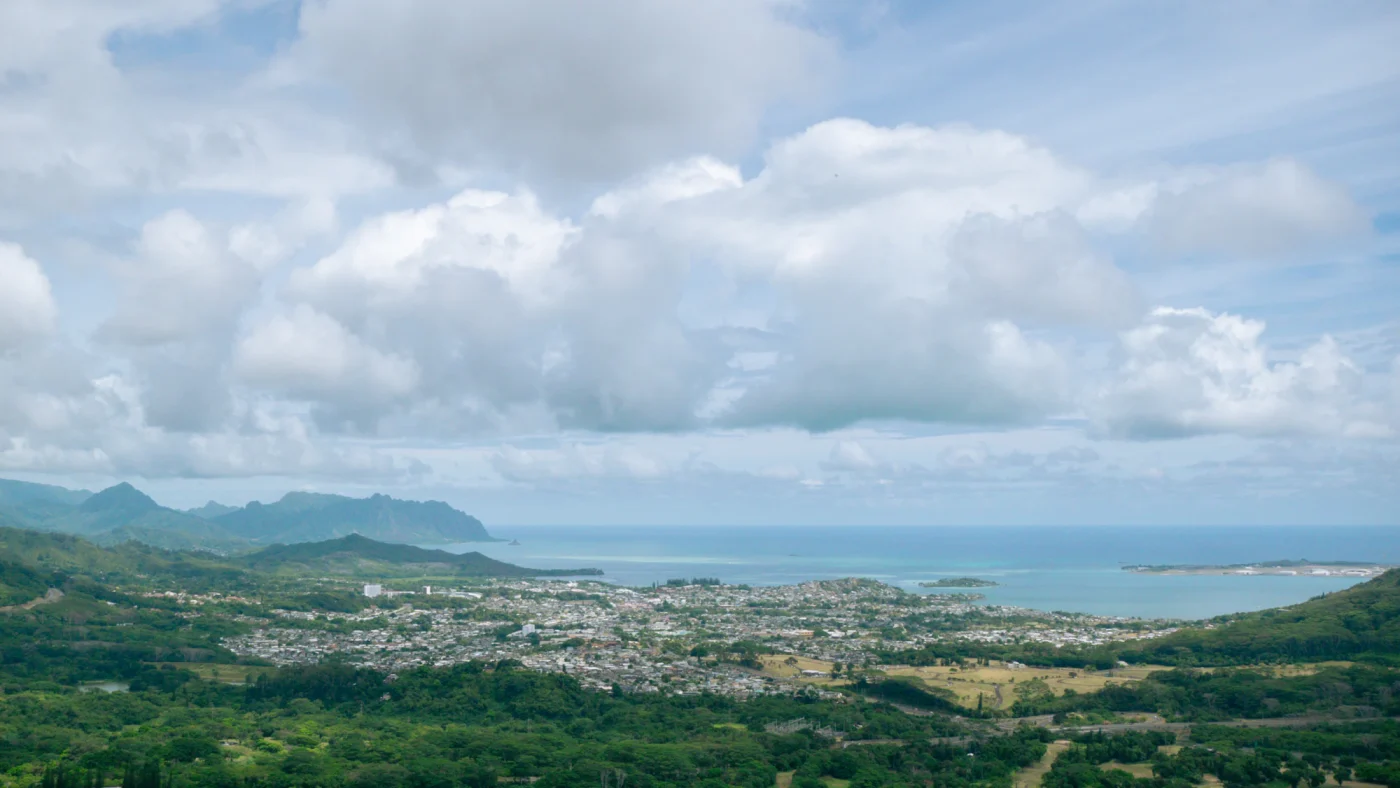
In this guide8 sections
Oʻahu is warm all year, so “weather” on Oʻahu mostly means three things: how much rain to expect, where on the island it falls, and what the ocean is doing. Here’s what to know when you’re choosing dates — including when the rainy season is.
When is the rainy season on Oʻahu?
The National Weather Service describes two seasons in Hawaiʻi: “summer” from about May to October and “winter” from about October to April, when most of the heavy rain falls. The wet season brings more frequent showers and the occasional bigger storm, but most days still include plenty of sunshine — especially in Waikīkī and on the West side.
Where it rains most
- Windward side and mountains (Kailua, Kāneʻohe, Mānoa valley): the trade winds push clouds against the Koʻolau mountains, so these areas get the most rain and are the greenest.
- Waikīkī, Honolulu and the South Shore: drier and sunnier.
- West side (Ko Olina, Waiʻanae Coast): usually the driest and sunniest part of the island.
Temperatures (°F and °C)
According to NOAA’s 1991–2020 climate normals for Honolulu’s airport, the average daily high is about 80.5 °F (27 °C) in January and 88.8 °F (32 °C) in August. Nights are mild year-round, and the ocean stays comfortable for swimming.
The same station — on the dry south shore — averages only about 16 inches of rain a year, with March the wettest month and June the driest. Windward and mountain areas get far more.
| Month | Avg. high (°F) | Avg. high (°C) |
|---|---|---|
| January | 80.5 | 27 |
| August | 88.8 | 32 |
Source: NOAA National Centers for Environmental Information, 1991–2020 normals, Honolulu International Airport.
The ocean by season
- Winter: big surf on the North Shore — great to watch, dangerous to swim. South-facing beaches are often calmer.
- Summer: the North Shore usually calms down; the South Shore gets more surf.
Watching North Shore winter surf
Packing for Oʻahu weather
What to do on a rainy day
Head to the drier side of the island, or try museums and food tours. See our rainy-day ideas.
Frequently asked questions
When is the rainy season in Oʻahu?
Roughly October through April, with more frequent showers on the Windward side and in the mountains. Many days are still sunny, especially in Waikīkī and on the West side.
Is it worth visiting Oʻahu in the rainy season?
Yes. Showers are often short and local, temperatures stay warm, and winter brings whale season and big North Shore surf to watch.
What is the weather in Waikīkī in Celsius?
Average daytime highs at nearby Honolulu airport run from about 27 °C in January to about 32 °C in August.
While you’re nearby


Keep exploring Oʻahu
More in Travel Tips
Oʻahu on a Budget: How to Save Without Missing Out
Where the money goes on an Oʻahu trip, how to save on lodging and transport, and…
Oʻahu Island Information: Basics to Know Before You Go
Oʻahu basics for first-time visitors: geography, time zone, language, local customs and where to start planning.
Getting Around Oʻahu: Rental Car, TheBus, Skyline and Rideshare Compared
Rental car, TheBus, Skyline rail, rideshare or tours? How to get around Oʻahu depending on where…
What to Pack for Oʻahu: A Practical Packing List by Activity
A realistic Oʻahu packing list organized by beach, snorkel, hiking, rain and travel days — plus…